ConformaBio is the first company to pioneer conformation-based biotherapeutic design — combining artificial intelligence with proprietary computational algorithms to control and optimize protein conformations from the ground up. We maximize efficacy, stability, and manufacturability of next-generation vaccines and therapeutic proteins.
By generating ConformaX — our optimized conformational variants — we are unlocking a potential new frontier in synthetic biology, where protein structure is designed with intent, not left to chance.
Even minor shifts in a protein's three-dimensional structure can dramatically alter its stability, immunogenicity, and biological activity. Yet traditional development treats conformation as a secondary outcome — something observed, not engineered.
We take the opposite approach. Our AI-driven algorithms target critical structural regions — hinge domains, linkers, and flexible loops — to lock proteins into their most effective shape from day one. The result: higher potency, longer shelf-life, and fewer surprises in the clinic.
From computational design to analytical validation — we cover the full spectrum of biotherapeutic engineering.
Our AI-powered platform lets you design therapeutic proteins and vaccine candidates from sequence to structure — with conformation engineered in from the start, not optimized after the fact.
We don't operate a wet lab — instead, we bring deep bioanalytical expertise to help you evaluate and troubleshoot your data. Think of us as your specialized consultant for bioanalytical assessment, similar to how SFDA consultants support regulatory submissions.
At the core of our platform is a proprietary AI and algorithmic engine built from the ground up to predict, control, and optimize protein conformation — combining deep learning, structural bioinformatics, and physics-based simulation.
Deep learning models map the full conformational landscape using vast structural databases and learned sequence-structure relationships.
Physics-informed algorithms simulate molecular motion to identify flexible regions, hinge behaviors, and conformational transition pathways.
Machine learning models score and rank candidate conformations by thermodynamic stability, binding affinity, and functional fitness.
Our algorithms forecast how sequence and structural changes will impact conformation, stability, and downstream biological function — before synthesis.
Our algorithms guide and optimize the 3D conformation of biologics — locking them into their most potent, stable form before they ever reach the bench.
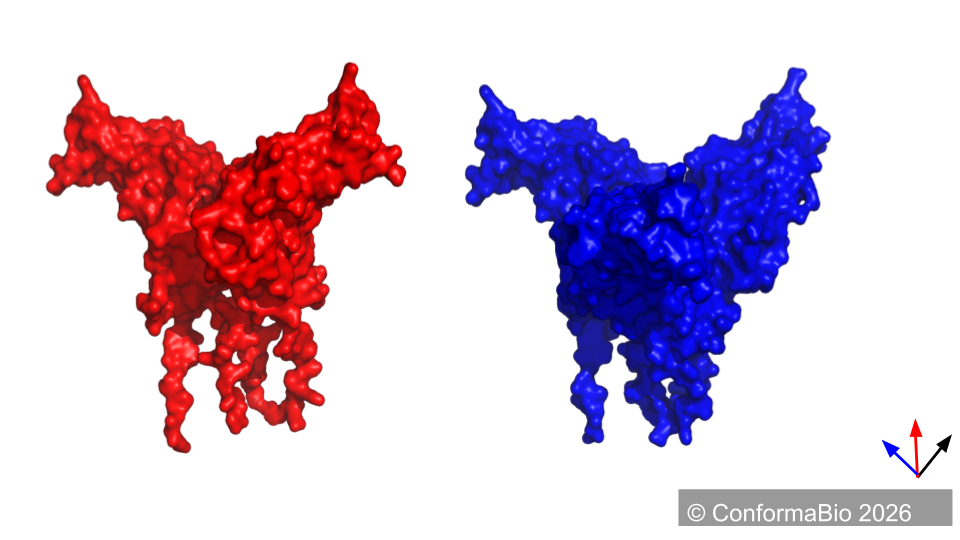
Wild-Type (red) vs. Designed Conformer (blue)
Identify and engineer critical hinge regions to gain precise control over protein conformation. By targeting these flexible structural switches — the linkers and loops connecting functional domains — we dictate how the protein folds, moves, and presents itself to biological targets.
Elicit stronger, more effective immune responses by exposing both cryptic and surface-accessible epitopes essential for recognition. Our conformation-aware design ensures optimal antigen presentation — unlocking better immunogenic profiles for next-generation vaccines and biologics.
Improve overall protein stability through conformation-guided engineering — reducing aggregation, increasing half-life, and introducing optimal mutations that enhance thermostability, shelf-life, and in-vivo durability.
AI-optimized constructs ready for scalable production — reducing development timelines and manufacturing costs from the start.
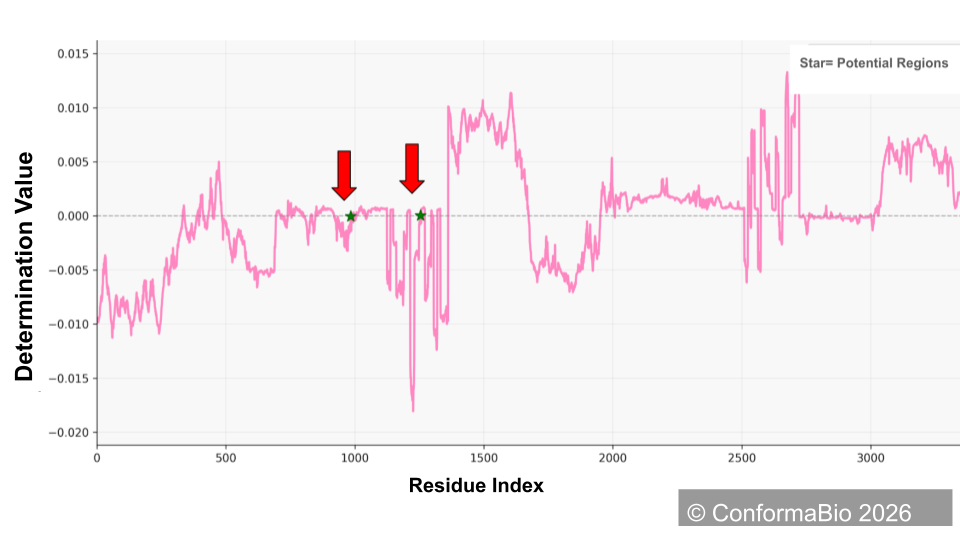
Our algorithm has been tested against real protein targets — here are the results that demonstrate its effectiveness.
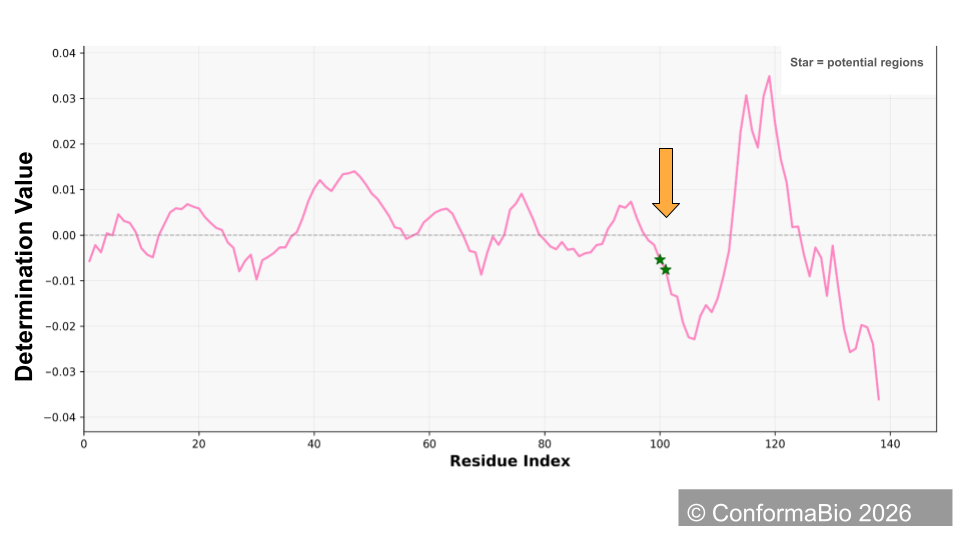
Our algorithm accurately identifies known hinge regions in both the SARS-CoV-2 spike protein (top, ~3,400 residues) and Cadherin (bottom, ~145 residues). Arrows indicate predicted hinge positions; green stars mark validated potential regions — demonstrating reliability across proteins of vastly different sizes and structural complexity.
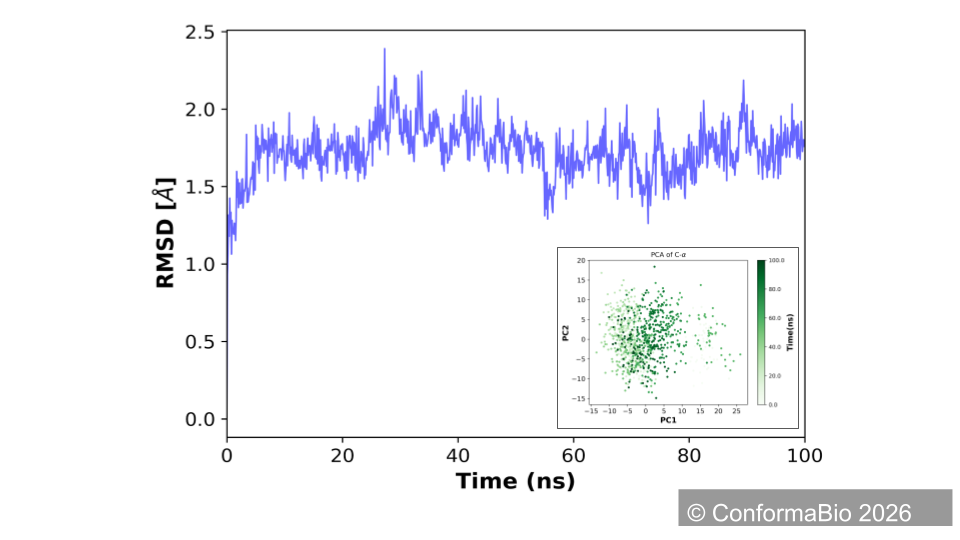
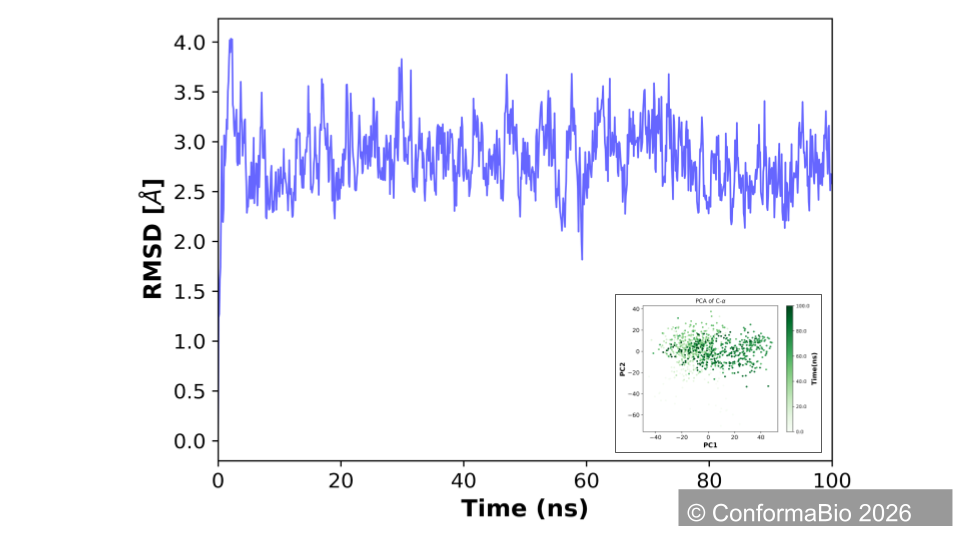
Wild-Type (WT) — RMSD ~2.5-3.5 A
Designed Conformer — RMSD ~1.5-2.0 A
Molecular dynamics simulations (100 ns) comparing the wild-type protein (top) against our designed conformer (bottom). The engineered variant shows significantly reduced RMSD fluctuation and tighter conformational stability, with PCA analysis (insets) confirming a more compact conformational sampling space.
Analyze the 3D structure of the target protein or vaccine candidate
Simulate and evaluate conformational behavior over time
Apply our proprietary algorithm to identify critical hinge regions
Engineer targeted modifications for optimized conformation and stability
From structural analysis through molecular dynamics evaluation, hinge detection, and targeted modification — our end-to-end pipeline delivers conformation-optimized protein designs.
AI-engineered conformations mean better outcomes — from the lab bench to the patient.
More robust vaccines and therapeutics that maintain potency across storage, transport, and diverse clinical settings.
AI-validated designs mean higher success rates from preclinical through clinical — with fewer late-stage failures due to stability or formulation issues.
Algorithmically streamlined development and reduced cold-chain dependence — enabling broader, faster access especially in underserved regions.
Whether you need bioanalytical analysis, custom biotherapeutic design, or full-pipeline AI optimization — we'd love to explore how our platform can accelerate your program.
Get in Touch →